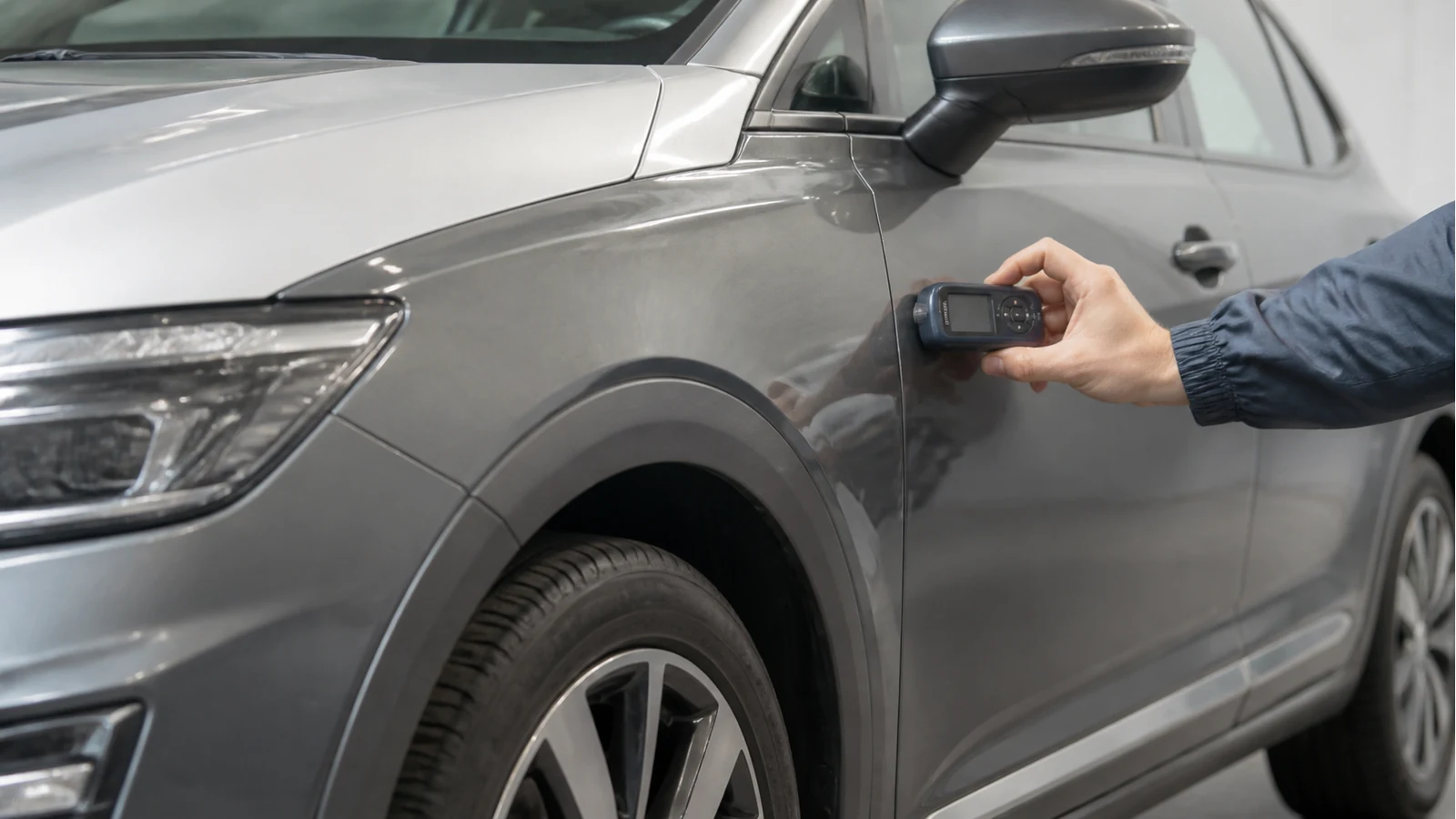
Steel Aluminium Plastic Car Panels Paint Gauge UK
Direct answer: Steel, Aluminium and Plastic Car Panels should be used as a decision aid, not as a verdict machine. A paint thickness gauge can make hidden repair clues visible, but the useful result is the pattern across comparable panels. In the UK, that pattern should be checked beside the vehicle's paperwork, MOT history, service evidence and the seller's explanation before money changes hands.
Metal type changes the measurement method
Many automotive gauges use magnetic methods on steel-like substrates and eddy-current methods on aluminium or other non-magnetic conductive metals. The distinction matters because ISO 2178 addresses non-magnetic coatings on magnetizable base metals, while ISO 2360 addresses non-conductive coatings on non-magnetic electrically conductive base metals. A gauge that recognises both types can simplify field use, but the reader still has to compare like with like.
Annotated example without labels on the car
Imagine a hatchback with a steel front door, an aluminium bonnet and a plastic bumper. The steel door can be compared with the opposite steel door. The aluminium bonnet should be compared with similar aluminium areas if present, or treated as its own evidence point. The plastic bumper is different: most common magnetic or eddy-current paint gauges are designed around conductive or magnetizable substrates, so plastic bumper readings are usually not comparable or may not be available at all.
How to avoid fooling yourself
- Compare same material, same panel location and similar surface shape wherever possible.
- Do not use bumper readings to clear or condemn the metal structure behind the bumper.
- Use visual clues on plastic: colour match, texture, overspray, mounting gaps, cracked paint and repair invoices.
- Repeat readings when a curved edge, dirt or poor probe contact gives an odd result.
- Treat an unexplained pattern across metal panels as a prompt for paperwork and history checks.
The carVertical guide notes that substrate material can affect paint thickness context. The RAC used-car checklist also reminds buyers to inspect colour match, panel alignment and signs of filler or poor repair. Those visual checks are especially important where the gauge cannot give a useful comparison.
Decision table
| Panel type | Gauge usefulness | Reader action |
|---|---|---|
| Steel door or wing | Usually useful with a compatible magnetic/dual gauge. | Compare to the opposite side and adjacent metal panels. |
| Aluminium bonnet or panel | Useful only with suitable non-ferrous capability. | Check the gauge mode and avoid comparing directly with steel baselines. |
| Plastic bumper | Usually not a reliable target for standard metal-substrate methods. | Use visual inspection, fit, invoices and history instead. |
Negative fit and stop conditions
Do not keep pressing harder on a plastic bumper hoping for a meaningful number. Do not compare a bonnet and a door as if material and factory process are identical. Stop and widen the inspection when inconsistent readings line up with poor gaps, replaced fixings, overspray or seller evasiveness.
Why comparison beats absolute confidence
The reader's real job is not to memorise every material science detail. It is to avoid making bad comparisons. A steel door and an aluminium bonnet may both be painted, but the gauge may be using different measurement principles. A plastic bumper may look like part of the same paint story, yet it does not provide the same measurement target. Once you understand that, confusing readings become less mysterious and less frightening.
Use the car's layout. Doors are often your best side-to-side comparison. Rear quarters can be useful but may have complex shapes. Bonnets and wings vary by model; some are aluminium, some steel, and some repairs introduce replacement panels. Bumpers, mirror caps and trims are visual-inspection areas. If a bumper is a slightly different shade, that may be normal material and paint-process variation, or it may be repair. The gauge usually cannot settle that question on plastic.
When a reading surprises you, ask three questions before you believe it. Was the surface clean and dry? Was the probe flat and stable? Am I comparing the same material and location? If any answer is no, repeat the measurement in a better spot. If the repeated pattern remains odd and visible clues agree with it, then you have a meaningful concern. If the pattern disappears, the first number was probably technique or surface noise.
What to do when the panel cannot be measured
Use old-fashioned inspection. Look along reflections for ripples. Check the fit to adjacent panels. Look for overspray on textured plastic, parking sensors, grilles, arch liners and rubber edges. Ask for invoices if a bumper or wing has clearly been painted. On a private purchase, do not let an unmeasurable bumper become a blind spot in the whole decision. It is one reason to combine gauge readings with paperwork, history and a test drive.
For newer cars with mixed materials, make a small map in your notes: left door, right door, bonnet, roof, rear quarter, bumper visual only. That map stops you averaging readings that should never be averaged. It also helps if you come back for a second viewing or ask a mechanic to inspect the car. The cleaner your notes, the easier it is to separate a genuine repair pattern from a material-change pattern and explain your concern without sounding accusatory.
When this check is not enough
Do not use a paint thickness gauge as a standalone proof of accident history, structural safety, legal status or formal calibration.
When to stop and get a professional inspection
Stop or escalate when paperwork does not match, category/history is unclear, readings are inconsistent with visible damage, the panel material is unsuitable, or the decision affects safety or a large payment.
Next step
If your usual checks involve steel and aluminium body panels, the PaintCoating paint coating thickness gauge can be relevant because the product route is for a handheld automotive coating gauge. It is still the user's job to understand which panels are comparable and which are not.