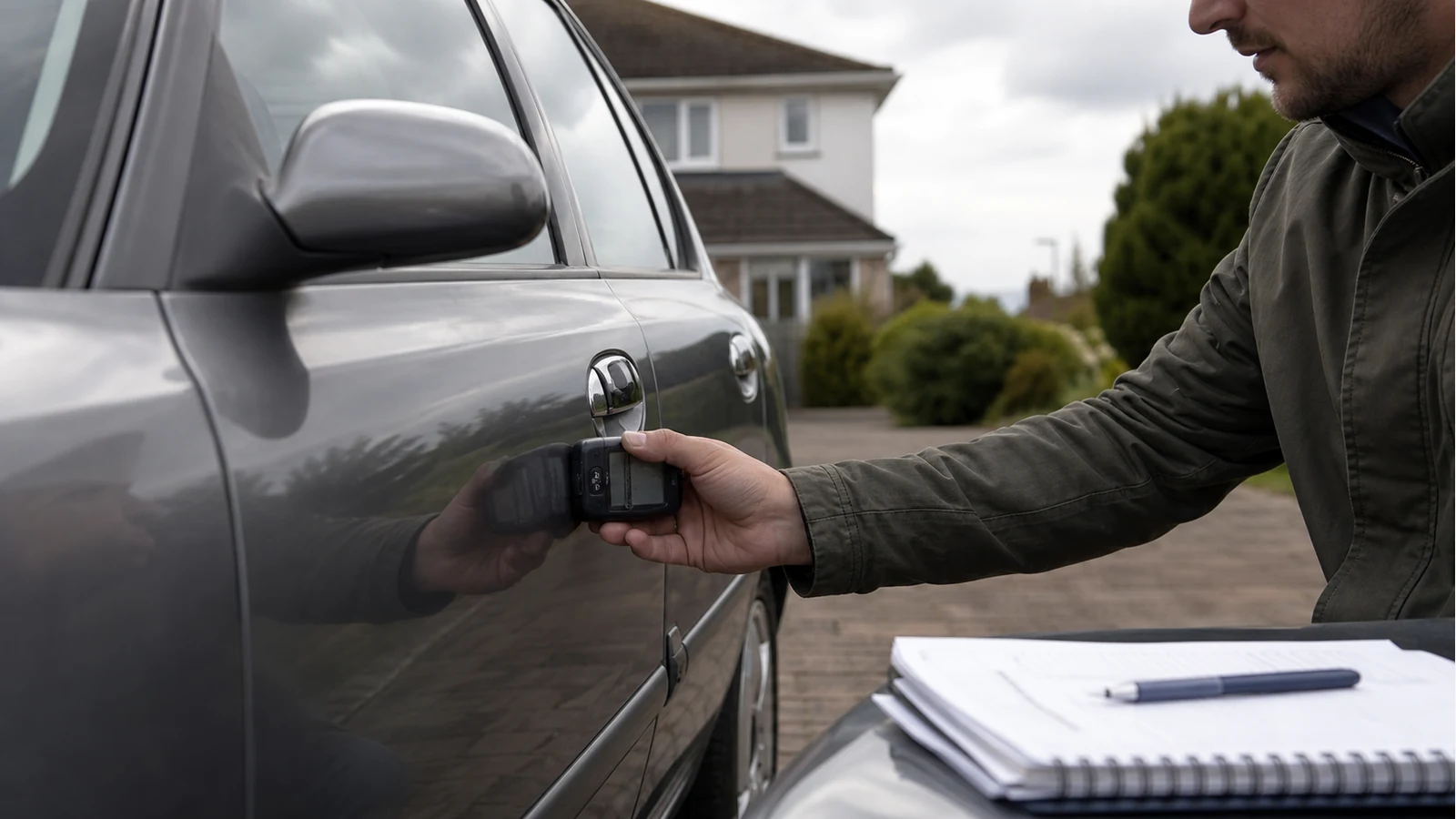
Used Car Inspection Checklist Paintwork UK
Direct answer: Used Car Inspection Checklist UK should be used as a decision aid, not as a verdict machine. A paint thickness gauge can make hidden repair clues visible, but the useful result is the pattern across comparable panels. In the UK, that pattern should be checked beside the vehicle's paperwork, MOT history, service evidence and the seller's explanation before money changes hands.
Start with identity and paperwork before the paint
Begin with the boring checks because they protect you from the biggest mistakes. Match the registration, make, model and VIN against the log book, and use the official GOV.UK used vehicle checks before you treat any shiny paintwork as a good sign. Then check the GOV.UK MOT history service for mileage pattern, failures and advisories. A gauge reading can suggest a repaired panel; it cannot tell you whether there is outstanding finance, whether the V5C is wrong, or whether an insurer has previously recorded a total loss.
Paintwork checklist for the viewing
- Walk around the car once without the gauge. Look for colour mismatch, uneven panel gaps, ripples, overspray on rubber seals and different texture between adjacent panels.
- Use the gauge on clean, dry metal panels only. Take several readings on the roof or another likely original panel to establish a rough baseline.
- Measure comparable points: front wing to opposite front wing, door to opposite door, rear quarter to opposite rear quarter. Do not compare a plastic bumper with a steel door.
- Write down clusters, not isolated drama. A whole door reading much higher than the opposite door matters more than one awkward edge reading.
- Ask the seller for repair invoices when a panel stands out. A honest repair record is different from a vague denial.
The RAC used car buying checklist also puts paint match, panel alignment and accident clues in the wider viewing routine. The AA vehicle inspection checklist is a useful reminder that bodywork is only one part of condition; brakes, tyres, steering, suspension and road test behaviour can matter more than a tidy paint number.
How to read the pattern without overclaiming
Most buyer mistakes come from hunting for one magic number. A better question is whether one panel is out of character compared with the rest of the car. The carVertical paint gauge guide explains that factory ranges vary and that consistency across the vehicle is usually more useful than a universal threshold. If the roof, bonnet and left side sit in one broad band, but the right rear quarter is several times thicker, you have a question for the seller. If the whole car is uniformly high, you may be looking at a full repaint, a specialist finish, or a measurement problem; you need more evidence.
Proceed, pause or walk away
| What you find | Reader action |
|---|---|
| Small variation across comparable metal panels | Continue with normal checks; do not buy on paint readings alone. |
| One panel much higher than its opposite side | Ask for repair history and inspect panel gaps, bolts, seals and inner edges. |
| High readings plus poor gaps, overspray or evasive answers | Pause, run a history check and consider an independent inspection. |
| Seller refuses paperwork, VIN access or sensible inspection | Stop the viewing. The problem is trust, not microns. |
Who should not rely on this alone
Do not rely on a gauge alone if the car is expensive, recently repaired, category-marked, imported, modified, or being sold with a story that keeps changing. Do not use it to certify structural safety. Use it to decide what to ask next. When the next question affects safety or a large payment, get a vehicle history check or an independent engineer.
What the checklist looks like in real life
A useful viewing order feels almost boring: identity, condition, measurement, explanation, decision. If you start with the gauge, you may become anchored to the first surprising number and miss a simpler warning such as a log book mismatch or a seller who cannot explain ownership. If you start with paperwork and then inspect the car, the gauge becomes one more piece of evidence. That is better psychology for a high-pressure private viewing because it slows the decision down without making the buyer feel helpless.
For a normal family hatchback, take the roof or another broad upper panel as a rough reference, then compare the front wings, front doors, rear doors and rear quarters side to side. Work in clusters. Three sensible readings from one door tell you more than one heroic reading from a curved edge. If one panel is high, look at the bolts, inner returns, sealant line, orange-peel texture and colour match. If the seller has a dated invoice for a cosmetic repair, the decision may simply become a price conversation. If the seller insists nothing happened while the car tells a different story, the decision becomes a trust conversation.
There is also a human trap here: after travelling to view a car, buyers want the trip to be worth it. A checklist protects you from that sunk-cost pull. Write down the stop points before you arrive: no matching V5C, no VIN access, unclear MOT story, pressure for an instant deposit, or paint readings that fit visible repair clues but no explanation. When a stop point appears, leaving is not overreacting; it is following the rule you set while calm.
When this check is not enough
Do not use a paint thickness gauge as a standalone proof of accident history, structural safety, legal status or formal calibration.
When to stop and get a professional inspection
Stop or escalate when paperwork does not match, category/history is unclear, readings are inconsistent with visible damage, the panel material is unsuitable, or the decision affects safety or a large payment.
Next step
If you often view used cars and want quick evidence before deciding whether to continue, a simple same-site paint gauge such as the PaintCoating paint coating thickness gauge can fit the checklist. It is relevant when you are comparing metal panels at the viewing; it is not a replacement for MOT, V5C, VIN and history checks.